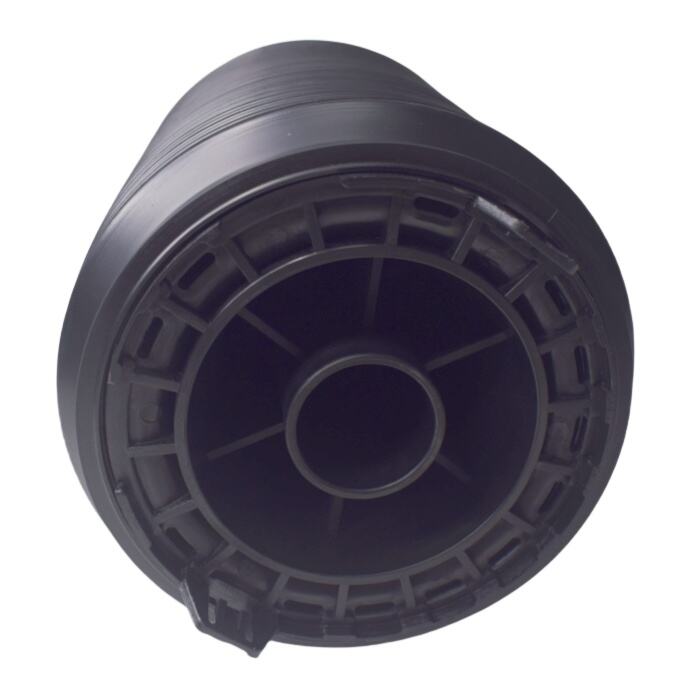
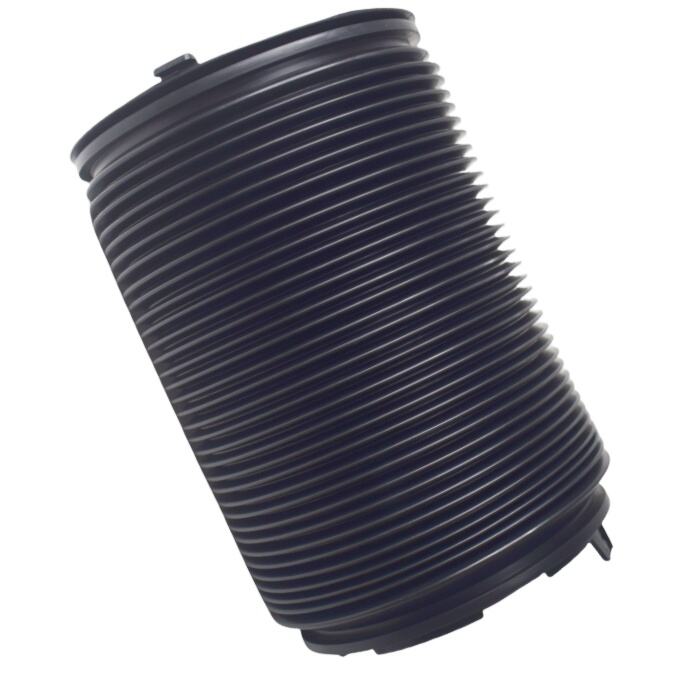
Exceptional Vibration Isolation Protecting Equipment and Personnel
The vibration isolation performance delivered by rubber air springs represents a critical advantage that protects both expensive equipment and human operators from the damaging effects of mechanical oscillations and shock loads. This isolation capability stems from the fundamental operating principle where compressed air acts as a pneumatic spring with inherently low natural frequency, effectively decoupling supported equipment from vibration sources across a broad frequency spectrum. The rubber bellows construction adds material damping that dissipates vibrational energy as heat, preventing resonance amplification that occurs with undamped metal spring systems and could lead to catastrophic equipment damage or structural failure. Industrial machinery installations particularly benefit from this isolation performance, as precision manufacturing equipment, electronic assembly systems, and measurement instruments require stable mounting platforms isolated from building vibrations, nearby equipment operation, and environmental disturbances. A stamping press mounted on air springs prevents transmission of impact forces into building foundations, protecting structural integrity and eliminating disturbances to adjacent precision operations that could compromise product quality. The multi-axis isolation provided by properly configured air suspension systems addresses vibrations in vertical, lateral, and rotational modes simultaneously, creating truly comprehensive protection that single-axis isolation systems cannot achieve. Vehicle applications showcase isolation benefits through dramatically improved ride comfort, as occupants experience reduced exposure to road irregularities, potholes, and surface discontinuities that cause jarring impacts in conventional suspension systems. Long-haul truck drivers report significantly reduced fatigue levels when operating vehicles equipped with air suspension, directly correlating to improved safety through enhanced alertness and reduced physical stress during extended driving periods. Agricultural equipment operators working in fields encounter severe terrain irregularities and implement-induced vibrations that traditional suspension struggles to manage effectively, while air suspension systems absorb these disturbances efficiently, protecting operators from debilitating whole-body vibration exposure linked to long-term health problems. The progressive spring rate characteristic of air springs provides increasing isolation effectiveness as disturbance magnitude grows, automatically adapting to severe shock events without bottoming out or transmitting excessive forces to protected equipment. Railway applications demonstrate isolation benefits through reduced track-induced vibrations transmitted to passenger compartments and freight cargo, improving passenger comfort on commuter trains and protecting sensitive freight from damage during transportation. The isolation effectiveness extends to acoustic frequencies, reducing structure-borne noise transmission through mounting points and creating quieter operating environments in vehicles, industrial facilities, and transportation equipment. Testing protocols quantify isolation performance through transmissibility measurements across frequency ranges relevant to specific applications, validating that installations achieve design objectives for vibration reduction. The tunable nature of air suspension allows engineers to optimize natural frequency and damping characteristics for particular vibration spectra encountered in specific applications, maximizing isolation effectiveness where it matters most for equipment protection and operator comfort. Maintenance of isolation performance throughout the service life remains consistent because the simple construction avoids wear mechanisms that degrade metal spring systems, such as friction in sliding interfaces and work hardening of spring materials, ensuring reliable long-term protection.

 EN