
 EN
EN



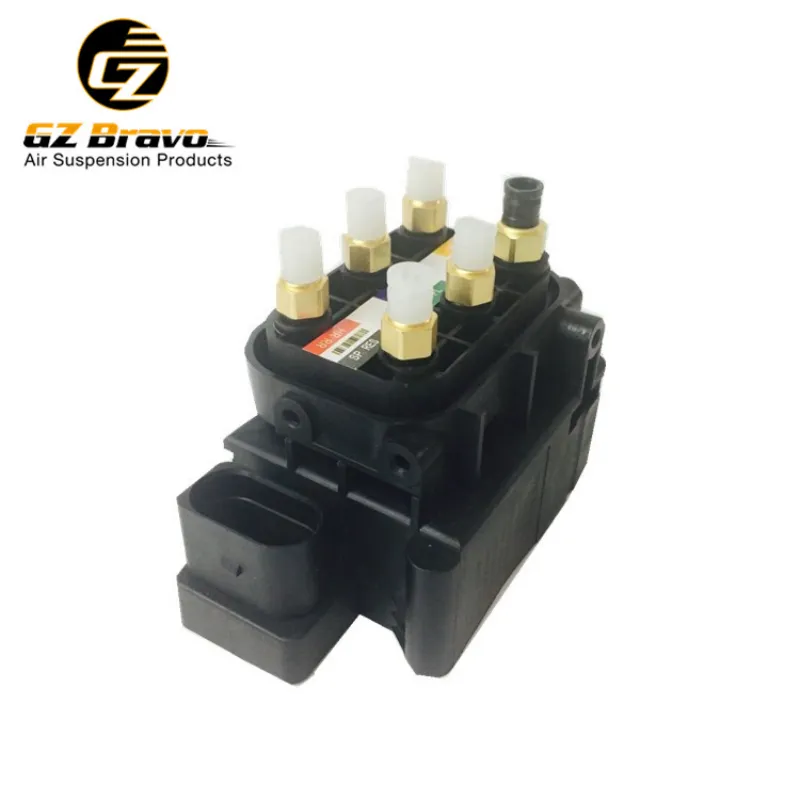
The question of whether a solenoid valve block is truly essential for precise control in air suspension systems is one that every vehicle owner, fleet manager, and automotive technician should understand clearly. Air suspension systems are complex, pressure-sensitive assemblies that depend on accurate, millisecond-level adjustments to maintain ride height, load balance, and driving stability. Without a properly functioning solenoid valve block, the entire system loses its ability to respond intelligently to road conditions and vehicle load changes.
To answer the central question directly: yes, the solenoid valve block is not merely a convenient add-on but a fundamental component in any air suspension architecture. It acts as the primary traffic controller for compressed air, directing flow to and from individual air springs or struts with precision that no mechanical valve can match. Understanding how and why this component is indispensable will help you make better decisions about maintenance, replacement, and system upgrades — particularly for vehicles like the Mercedes-Benz ML W164, GL X164, W166, X166, and W221, where Airmatic distribution systems demand exact performance.
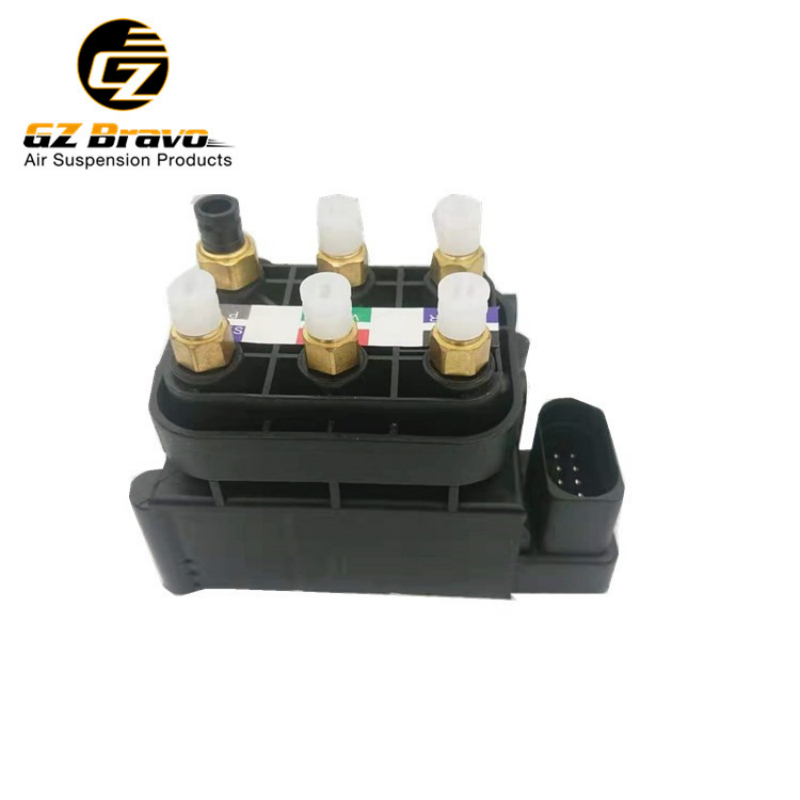
The Role of a Solenoid Valve Block in Air Suspension Architecture
Centralized Air Distribution Logic
An air suspension system is fundamentally a network of pressurized pathways connecting a compressor, a reservoir, and individual air springs at each wheel corner. The solenoid valve block sits at the heart of this network, serving as the central node through which all air distribution decisions are made. It houses multiple electronically controlled solenoid valves within a single compact assembly, allowing the suspension control unit to address each corner of the vehicle independently.
This centralized design is critical because air suspension logic is not a simple open-or-close operation. The system must simultaneously assess ride height sensor data, accelerometer input, steering angle, and vehicle speed before issuing commands to the solenoid valve block. Each solenoid within the block opens or closes in response to electrical signals, enabling the precise filling or venting of specific air springs without affecting the others. This granular control is what separates a high-quality air suspension from a rough, imprecise ride.
Without this centralized assembly, a system would need separate valve actuators distributed around the vehicle, dramatically increasing wiring complexity, response latency, and potential failure points. The solenoid valve block consolidates all of this functionality into one serviceable unit, making the system both more reliable and easier to diagnose.
Precision Timing and Pressure Management
One of the most important technical characteristics of a solenoid valve block is its ability to open and close individual air channels within milliseconds. Air suspension control modules issue commands based on real-time sensor data, and the physical response of the valve block must match that speed to be effective. A worn or faulty solenoid valve block introduces latency, inconsistency, or complete non-response, all of which degrade ride quality and handling precision.
Pressure management is equally important. Each solenoid valve must maintain a perfect seal when closed to prevent air bleed-off from the springs. Even a microscopic leak across a valve seat can cause gradual ride height loss, particularly noticeable when a vehicle sits overnight or under sustained load. The internal construction of a quality solenoid valve block uses precision-machined valve seats and high-durability sealing materials to prevent this kind of slow deterioration.
In systems like the Mercedes-Benz Airmatic setup, the solenoid valve block also manages the distribution valve that connects the front and rear circuits, allowing cross-system air balancing during cornering and braking events. This level of pressure management is impossible to achieve with conventional mechanical valves, confirming the essential nature of the solenoid-based design.
Why Solenoid Valve Block Condition Directly Affects Ride Precision
The Relationship Between Valve Integrity and Ride Height Accuracy
Ride height accuracy in an air suspension vehicle is not just about comfort — it directly affects aerodynamics, headlight alignment, driveline angle, and load-carrying capacity. The suspension control unit continuously monitors height sensors and makes micro-corrections by instructing the solenoid valve block to add or release small volumes of air. This feedback loop only works if the valve block responds precisely to every command.
When the solenoid valve block begins to degrade — through age, contamination, or electrical wear — the feedback loop breaks down. The control unit may send a command to raise the rear left corner by a specific amount, but if the corresponding solenoid is sticky or leaking, the actual movement may overshoot, undershoot, or not occur at all. Over time, this imprecision causes the vehicle to adopt a permanent lean or sag, which drivers often mistake for a compressor or air spring problem.
Replacing the solenoid valve block with an OEM-quality unit restores the direct, accurate link between the control module's commands and the physical response of the air springs. This is why many technicians find that a block replacement resolves ride height complaints that the compressor and springs alone could not fix.
Solenoid Valve Block Failure Patterns and Their Impact
Understanding failure modes helps explain why this component is so essential. The most common failure pattern is internal seal degradation, where the rubber O-rings or valve diaphragms inside the solenoid valve block harden and crack with age. This causes air to bypass the valve, leading to pressure bleed-off and gradual height loss. The compressor then runs more frequently to compensate, accelerating its own wear.
A second failure mode involves the solenoid coil itself. Each valve in the solenoid valve block uses an electromagnetic coil to actuate a plunger. If the coil develops high resistance or an open circuit due to heat cycling, corrosion, or vibration fatigue, the valve will no longer respond to control module commands. The system may log fault codes for specific valve circuits, but the root cause is internal to the block assembly.
External contamination is a third risk factor. Moisture, compressor oil residue, or debris entering the air lines can settle inside the solenoid valve block and obstruct valve movement or damage seating surfaces. This type of failure is often intermittent, making it harder to diagnose but no less damaging to system precision over time.
Application Focus: Solenoid Valve Block in Mercedes-Benz Airmatic Systems
Why Mercedes-Benz Airmatic Demands High-Accuracy Valve Control
Mercedes-Benz Airmatic systems represent one of the most sophisticated air suspension architectures in the automotive industry. Used across the ML W164, GL X164, W166 GLE, X166 GLS, and W221 S-Class platforms, the Airmatic setup integrates ride height control, adaptive damping, and dynamic leveling into a single electronically managed system. The solenoid valve block used in these vehicles must meet extremely tight tolerances for both pressure holding and response speed.
These vehicles rely on the solenoid valve block to coordinate air distribution across both axles while maintaining individual corner control. In a dynamic driving scenario — such as a highway lane change or a sharp turn — the Airmatic system uses the valve block to shift air balance between springs in ways that reduce body roll and maintain tire contact patch. This level of active dynamic control simply would not be possible without a high-precision solenoid valve block.
The OEM part numbers A2123200358, A2123200658, and 2123200158 reference the specific Airmatic distribution valve blocks used across these platforms. Using an OEM-quality replacement that matches these specifications ensures full compatibility with the vehicle's control module and sensor system, preserving the exact functional relationship the system was engineered to deliver.
Diagnosing Solenoid Valve Block Issues on Mercedes-Benz Platforms
On Mercedes-Benz vehicles, the Airmatic control module communicates via the CAN bus and stores specific fault codes for valve circuit faults. Common codes related to the solenoid valve block include references to individual valve circuit faults, pressure loss on specific axles, or ride height deviation warnings. These codes are a valuable starting point, but they identify symptom locations rather than root causes.
A practical diagnostic approach involves monitoring live ride height data with a compatible scan tool while the vehicle is at rest and under load. If one or more corners fail to hold height consistently, and the compressor and air springs test normally, the solenoid valve block becomes the primary suspect. A leak-down test using a dedicated air suspension test kit can confirm internal valve leakage within the block assembly.
Visual inspection of the solenoid valve block connector and wiring harness is also important, as corroded pins or damaged insulation can mimic internal valve failures. However, if electrical continuity is confirmed and faults persist, block replacement is typically the most efficient resolution path, particularly on higher-mileage vehicles where internal seals are likely beyond their service life.
Choosing the Right Solenoid Valve Block Replacement
OEM Quality vs. Substandard Alternatives
The market offers a range of replacement options for the solenoid valve block, spanning genuine OEM parts, OEM-quality aftermarket units, and budget alternatives. For precision-critical systems like Mercedes-Benz Airmatic, the quality gap between these tiers has real consequences. Budget valve blocks often use lower-grade sealing materials that degrade faster under thermal cycling, and their solenoid coils may not meet the resistance and inductance specifications required by the original control module.
An OEM-quality solenoid valve block is manufactured to the same dimensional and material standards as the original, using correct O-ring compounds, valve seat geometry, and coil winding specifications. This ensures that the replacement unit integrates seamlessly with the Airmatic control logic without triggering false fault codes or requiring recalibration. It also means the replacement will perform reliably over its intended service life rather than failing prematurely due to material shortcuts.
For fleet operators and workshop owners who service multiple Mercedes-Benz vehicles, sourcing OEM-quality solenoid valve block units from reputable suppliers reduces comebacks and protects professional reputation. For individual vehicle owners, the cost difference between an OEM-quality block and a budget alternative is modest relative to the labor cost of a repeat replacement and the risk of compressor damage caused by persistent pressure loss.
Installation Considerations for Long-Term Performance
Installing a replacement solenoid valve block correctly is as important as choosing the right part. The installation site must be clean and free of moisture or debris before the new unit is connected. Air line fittings should be inspected and replaced if they show signs of cracking or deformation, since a leaking fitting will undermine the performance of even a perfect valve block.
The electrical connector should be fully seated and locked before powering the system. After installation, the system should be pressurized gradually and monitored for leak-down over a minimum 24-hour period before the vehicle returns to service. A ride height calibration reset via scan tool is recommended on Mercedes-Benz Airmatic platforms to ensure the control module establishes fresh baseline readings with the new solenoid valve block in place.
Documenting the installation mileage and date allows for proactive future maintenance planning. While a quality solenoid valve block has a long service life, knowing its age helps technicians anticipate replacement cycles and prevents unexpected failures on high-mileage vehicles where multiple suspension components may reach end-of-life simultaneously.
FAQ
What symptoms indicate a failing solenoid valve block in an air suspension system?
The most common symptoms of a failing solenoid valve block include gradual ride height loss at one or more corners, excessive compressor run time, ride height fault codes stored in the control module, and uneven vehicle stance when parked overnight. Intermittent leveling failures during driving, particularly when the system should be making dynamic adjustments, are also a strong indicator that the valve block is losing internal sealing integrity or coil performance.
Can a faulty solenoid valve block damage other air suspension components?
Yes. A leaking solenoid valve block forces the compressor to cycle more frequently to compensate for pressure loss, which accelerates compressor wear and can lead to premature compressor failure. Chronic pressure instability can also stress air spring membranes unevenly, shortening their service life. Addressing a faulty solenoid valve block promptly protects the broader suspension system from cascading component failures.
Is the solenoid valve block specific to certain vehicle models or platforms?
Yes, solenoid valve block designs are vehicle-specific because they must match the port configuration, electrical specifications, and control logic of each platform's air suspension system. For Mercedes-Benz Airmatic vehicles such as the ML W164, GL X164, W166, X166, and W221, the block is referenced by specific OEM part numbers and must not be substituted with units designed for different platforms, even if they appear physically similar.
How long does a quality solenoid valve block typically last?
A high-quality solenoid valve block manufactured to OEM specifications can last well over 100,000 miles under normal operating conditions. However, longevity depends heavily on the quality of air entering the system, ambient temperature extremes, and the overall condition of the compressor and dryer. Vehicles operating in regions with high humidity or extreme cold may see accelerated seal degradation, making periodic inspection of the solenoid valve block a worthwhile part of any air suspension maintenance routine.