
 EN
EN



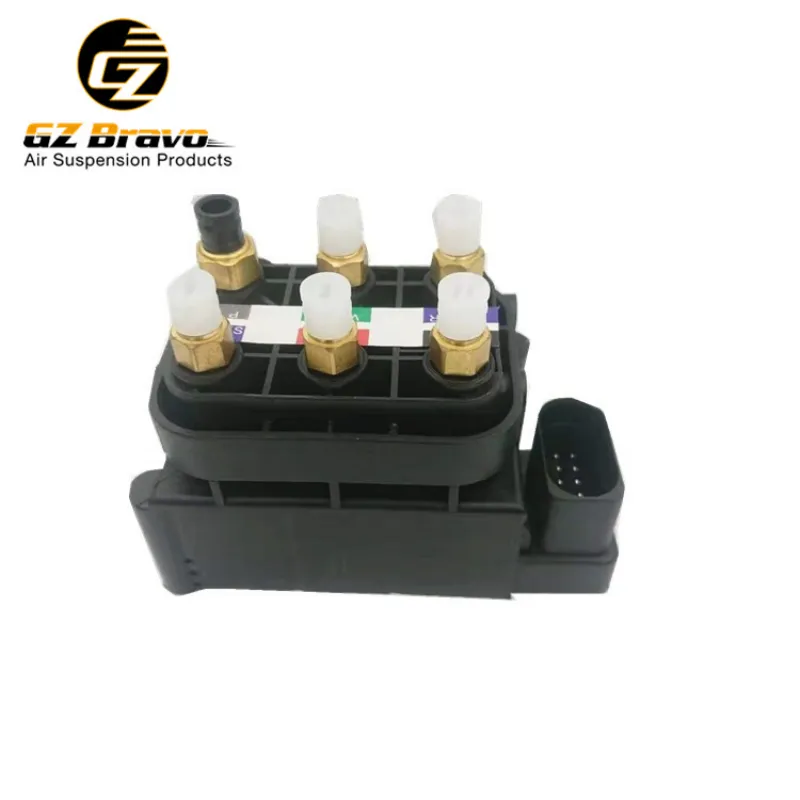
Modern air suspension systems depend on precise control of pressurized air to deliver the ride comfort and handling performance that drivers expect. At the center of this control architecture sits the solenoid valve block, a compact but critically important assembly that governs how air moves between the compressor, the reservoir, and each individual air spring. Without an accurately functioning solenoid valve block, the entire suspension system loses its ability to respond to road conditions, load changes, and driver commands in a timely and balanced manner. Understanding how this component improves airflow management is essential for anyone responsible for maintaining or upgrading an air suspension setup.
A solenoid valve block is not simply a passive fitting or a junction point in the pneumatic circuit. It is an active control device that uses electromagnetic actuation to open and close individual air passages with millisecond-level precision. Each solenoid within the block can be energized independently, which means the electronic control unit can route pressurized air exactly where it is needed, hold pressure in specific corners of the vehicle, or vent air away from a corner that is receiving too much load. This level of directional control is what separates a well-engineered air suspension from a basic passive spring system.
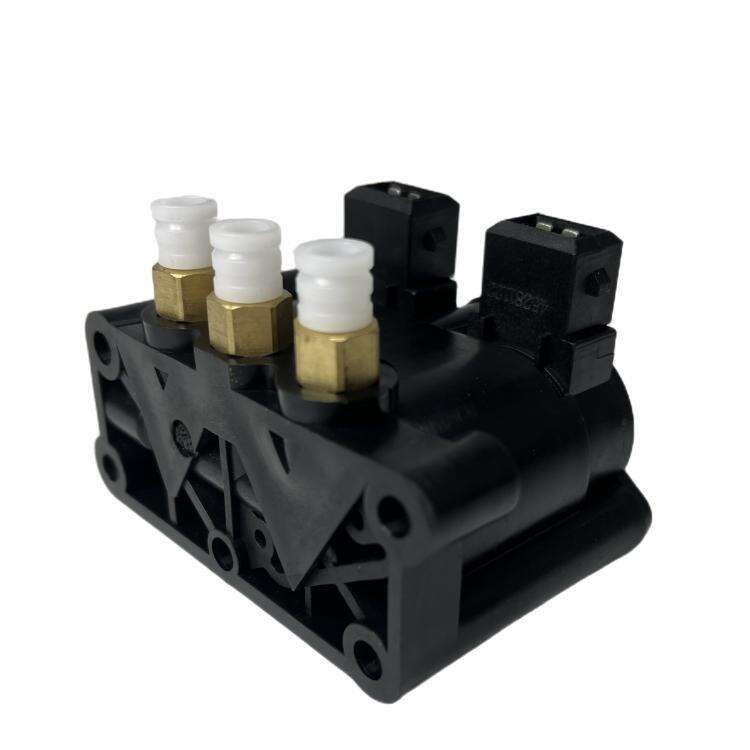
The Mechanical Role of a Solenoid Valve Block in Pneumatic Circuits
How the Block Integrates Into the Air Circuit
The solenoid valve block is typically mounted centrally in the engine bay or near the air compressor so that supply lines to each air spring run at comparable lengths. This balanced routing minimizes pressure drop differences across the circuit, helping the system deliver consistent inflation and deflation speeds at every corner. The block connects directly to the high-pressure output of the compressor, to a reservoir tank when one is fitted, and to individual supply lines leading to each air strut or air spring assembly.
Inside the block, a manifold body machined from aluminum or reinforced polymer houses multiple solenoid actuators, each controlling a dedicated port. When a solenoid coil receives an electrical signal, the plunger inside it shifts, either opening a valve seat to allow airflow or seating against it to block the path. The arrangement means that any combination of ports can be opened or closed simultaneously, giving the control unit enormous flexibility in how it manages the pneumatic state of the vehicle at any given moment.
This integration also means that the solenoid valve block serves as the primary safety barrier in the circuit. If power is lost or a fault is detected, the solenoids can be designed to fail in a closed or open position depending on the system's safety philosophy, protecting the air springs from sudden deflation or over-inflation during a fault condition.
Sealing and Internal Flow Dynamics
Effective airflow management depends not only on when a valve opens or closes but also on how cleanly it seals when in the closed position. A solenoid valve block uses precision-ground valve seats and elastomeric seals to achieve leak-free closure against operating pressures that can reach 16 bar or higher in some systems. Even a minor internal leak past a valve seat will cause the affected air spring to slowly lose pressure, leading to a vehicle that settles unevenly overnight or requires the compressor to cycle more frequently than intended.
The internal bore geometry of the manifold also influences airflow dynamics. Engineers design the passages within a quality solenoid valve block to maintain adequate cross-sectional area while minimizing turbulence, which reduces the time needed to inflate or deflate each corner. Faster response times translate directly into better ride control because the suspension can adapt to road surface changes and cornering loads more promptly.
Airflow Management and Ride Height Control
Corner-by-Corner Pressure Regulation
One of the most significant ways a solenoid valve block improves airflow management is by enabling corner-independent pressure control. A vehicle may need to raise its right rear corner to compensate for a heavy load on that side, while simultaneously holding the other three corners at their current pressure. The solenoid valve block makes this possible by selectively opening only the circuit path leading to that specific air spring, routing supply air precisely where it is needed without disturbing the others.
This capability is what gives modern adaptive air suspension systems their self-leveling behavior. Height sensors at each corner continuously report the body position to the control unit, which then calculates whether any corner needs additional inflation or deflation. The solenoid valve block executes those corrections by opening and closing its individual solenoids in sequences that can last only fractions of a second, keeping the vehicle level throughout loading, cornering, and braking events.
Without the precise switching behavior of a solenoid valve block, this kind of real-time corner management would be impossible. Mechanical valves or manual controls simply cannot respond quickly enough or with sufficient repeatability to maintain a level chassis during dynamic driving conditions.
Pressure Hold and Leak-Down Prevention
Another critical airflow management function of the solenoid valve block is its ability to isolate each air spring from the rest of the circuit when no adjustment is required. Once the system has inflated a corner to its target pressure, the relevant solenoid closes and holds that pressure without requiring the compressor to remain active. This isolation function prevents normal micro-leakage in the compressor's outlet valve from gradually bleeding back into the springs, extending compressor life and maintaining ride height over extended parking periods.
The quality of this pressure-hold function depends directly on the integrity of the solenoid valve block's internal seals and valve seats. A worn or contaminated block will allow slow pressure migration between circuits or back-leakage toward the exhaust port, causing the vehicle to sit lower than intended and triggering repeated compressor cycles. Replacing a degraded solenoid valve block with a precisely manufactured unit restores the system's ability to hold pressure reliably over time.
Electronic Integration and Signal Response
Communication With the Suspension Control Unit
The solenoid valve block does not operate in isolation. It functions as the pneumatic actuator arm of a broader electronic control strategy. The suspension control unit processes signals from height sensors, accelerometers, steering angle sensors, and vehicle speed inputs before deciding which solenoids to activate and for how long. The block must therefore respond to electrical signals reliably and consistently, because any hesitation or non-response in a solenoid coil translates directly into degraded ride control.
Most solenoid valve blocks designed for passenger vehicle air suspension operate on 12-volt direct current circuits, with coil resistance values that the control unit monitors to detect open-circuit or short-circuit faults. When a solenoid coil begins to fail, the control unit typically registers a fault code that identifies which specific valve within the block has become unreliable. This diagnostic transparency allows technicians to confirm the solenoid valve block as the source of a pressure management issue rather than chasing faults in the air springs or compressor.
Response Time and Duty Cycle Considerations
The speed at which each solenoid within the block responds to an electrical command directly affects how quickly the suspension system can make pressure corrections. High-quality solenoid valve blocks are engineered with coil winding specifications and plunger mass values that achieve opening and closing response times measured in milliseconds. Slower response creates a lag between the control unit's command and the actual pneumatic action, which is perceptible as sluggish self-leveling or delayed ride height adjustments when entering highway speeds.
Duty cycle is an equally important consideration. In demanding driving environments or when carrying varying loads, the solenoid valve block may need to operate its solenoids repeatedly over extended periods. Coil materials and thermal management within the block determine how well it sustains rapid cycling without coil resistance drifting or insulation breaking down. A well-designed solenoid valve block balances fast response with thermal durability to ensure consistent performance throughout the vehicle's service life.
Diagnosing and Addressing Solenoid Valve Block Failures
Common Failure Modes That Affect Airflow
The solenoid valve block is exposed to the same environmental stresses as any underhood component, including heat cycling, vibration, and moisture ingress. Over time, the elastomeric seals within the block can harden or crack, allowing air to pass a valve seat even when the solenoid is in its closed position. This internal leakage degrades the system's ability to hold pressure at individual corners and often results in a vehicle that gradually lowers on one axle while the opposite corner maintains its height correctly.
Solenoid coil failures represent another common failure mode. Coil winding can develop internal breaks due to thermal fatigue or vibration, causing the affected solenoid to become electrically open. A failed coil means the valve it controls is permanently stuck in its spring-loaded position, which depending on the valve's normally-open or normally-closed design can either permanently inflate or permanently cut off the air supply to one corner. The result is a suspension corner that no longer participates in leveling corrections, leading to persistent height imbalances.
Contamination from oil vapor, water, or debris entering through a degraded compressor air filter can also coat the valve seats inside the solenoid valve block, preventing clean closure and reducing the sealing force available at each valve. Regular attention to the compressor's inlet filter is one of the most effective preventive measures for extending the service life of the solenoid valve block.
When Replacement Is the Right Decision
Technicians evaluating an air suspension concern should include the solenoid valve block in any systematic diagnostic sequence. If fault codes point to specific solenoid circuits, if the vehicle exhibits corner-specific settling that does not correspond to air spring leakage, or if compressor run times have increased significantly without a change in driving conditions, the block warrants close inspection. Attempting to repair individual solenoid coils within a heavily contaminated or seal-degraded block is often less cost-effective than replacing the assembly with a new unit that restores all sealing surfaces and coil characteristics simultaneously.
Choosing a replacement solenoid valve block that matches the original equipment specifications ensures that the control unit's expected response times, coil resistance values, and pressure ratings are preserved. Installing a block with mismatched characteristics can introduce new calibration issues even after the original fault has been addressed, because the control unit's algorithms are tuned to the pneumatic response profile of the correct component.
FAQ
What symptoms indicate a failing solenoid valve block in an air suspension system?
The most common symptoms include one or more vehicle corners sitting lower than others, excessive compressor cycling, slow or uneven ride height adjustments, and suspension-related fault codes stored in the control unit. Internal leakage within the solenoid valve block can cause gradual overnight height loss even when the air springs themselves are intact and sealed correctly.
Can a solenoid valve block be repaired, or does it always need to be replaced?
In most cases, replacement of the complete solenoid valve block assembly is the recommended approach. Individual solenoid coils on some designs can be substituted if the manifold body and seals remain serviceable, but if the internal seals have hardened or the valve seats show wear, a full replacement restores all functions simultaneously and avoids repeat diagnostic work caused by progressive seal degradation.
How does the solenoid valve block differ from the air compressor in managing suspension pressure?
The air compressor generates pressure, while the solenoid valve block controls where that pressure goes and how it is retained within the circuit. The compressor supplies air to the block's inlet, and the block then routes it to specific corners based on commands from the suspension control unit. Without the solenoid valve block, the compressor could only inflate or deflate the entire circuit uniformly, with no ability to manage individual corners independently.
Does replacing a solenoid valve block require recalibration of the air suspension system?
In most vehicles, replacing the solenoid valve block with a correctly specified unit does not require recalibration of the ride height control parameters, because the block is a pneumatic actuator rather than a sensor. However, it is good practice to perform a ride height reset or re-initialization procedure after any major suspension component replacement to allow the control unit to relearn the current mechanical state of the system and confirm that all solenoids are responding as expected.
Table of Contents
- The Mechanical Role of a Solenoid Valve Block in Pneumatic Circuits
- Airflow Management and Ride Height Control
- Electronic Integration and Signal Response
- Diagnosing and Addressing Solenoid Valve Block Failures
-
FAQ
- What symptoms indicate a failing solenoid valve block in an air suspension system?
- Can a solenoid valve block be repaired, or does it always need to be replaced?
- How does the solenoid valve block differ from the air compressor in managing suspension pressure?
- Does replacing a solenoid valve block require recalibration of the air suspension system?