
 EN
EN



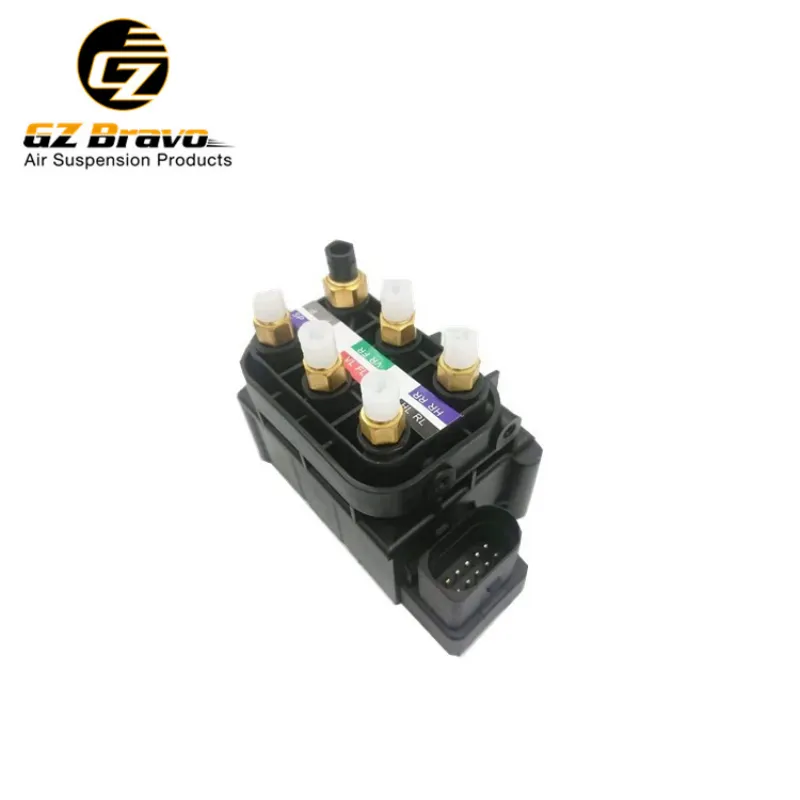
When engineers and automotive specialists evaluate the performance ceiling of adaptive suspension systems, one component consistently emerges as a critical enabler of real-time responsiveness: the solenoid valve block. In air suspension architectures, particularly those found in premium vehicles equipped with AIRMATIC or similar electronically controlled systems, the ability to modulate air pressure across individual corners of the vehicle within milliseconds is not a luxury — it is a fundamental requirement. The solenoid valve block sits at the intersection of electronic command and pneumatic execution, making it the decisive link between sensor input and physical ride adjustment.
The short answer to whether a solenoid valve block can support fast response in adaptive suspension systems is yes — but only when the component is functioning correctly, built to OEM specifications, and properly integrated within the broader suspension control architecture. A degraded or substandard solenoid valve block introduces latency, pressure inconsistency, and unpredictable ride behavior that directly undermines the adaptive system's ability to respond. Understanding exactly how the solenoid valve block contributes to response speed, and what conditions allow it to perform at its best, is essential for anyone maintaining, specifying, or replacing suspension components in performance-critical applications.
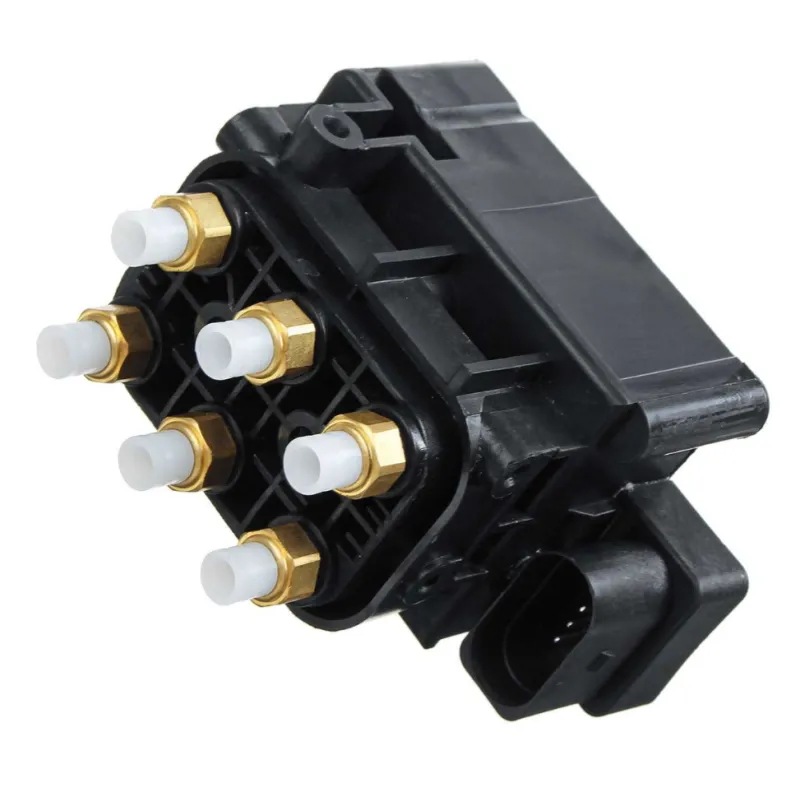
The Role of the Solenoid Valve Block in Adaptive Suspension Architecture
Pneumatic Control at the Core of Ride Adaptation
Adaptive suspension systems rely on continuous, real-time adjustment of air spring pressure to maintain ride height, absorb road irregularities, and optimize handling dynamics. The solenoid valve block is the pneumatic switching hub that makes this adjustment possible. It receives electrical signals from the suspension control module and translates those signals into precise valve opening and closing actions, directing compressed air to or from individual air springs as needed.
In a typical AIRMATIC system as used in Mercedes-Benz platforms including the ML W164, GL X164, W166, X166, and W221, the solenoid valve block manages multiple air circuits simultaneously. Each solenoid within the block corresponds to a specific air spring or circuit, and the coordinated operation of these solenoids determines how quickly and accurately the system can redistribute air pressure in response to changing road and load conditions.
The physical design of the solenoid valve block — including coil response time, valve seat geometry, and internal flow path dimensions — directly governs how fast each switching event can occur. A well-engineered solenoid valve block can execute valve transitions in the range of tens of milliseconds, which is fast enough to keep pace with the control module's update cycles and the physical demands of dynamic driving.
Signal-to-Action Latency and Why It Matters
In adaptive suspension design, latency is the enemy of performance. When the control module detects a change in vehicle attitude — whether from accelerometer data, steering angle input, or wheel speed variation — it issues a correction command almost instantaneously. The solenoid valve block must respond with equal speed to translate that command into a physical pressure change at the air spring.
If the solenoid valve block introduces delay — due to worn coil windings, contaminated valve seats, or internal seal degradation — the correction arrives late. The air spring does not adjust in time, and the vehicle experiences a perceptible lag in ride response. In dynamic driving scenarios such as cornering, braking, or traversing uneven surfaces at speed, even a delay of a few hundred milliseconds can result in noticeable body roll, pitch, or instability.
This is why the solenoid valve block is not simply a passive switching component. It is an active performance element whose condition and quality have a direct, measurable impact on the subjective and objective ride quality delivered by the adaptive suspension system.
How the Solenoid Valve Block Achieves Fast Response
Electromagnetic Actuation and Coil Design
The speed of a solenoid valve block is fundamentally determined by its electromagnetic actuation mechanism. Each solenoid consists of a coil wound around a ferromagnetic core. When current is applied, the resulting magnetic field pulls a plunger or armature against a spring return force, opening or closing the valve orifice. The speed of this action depends on coil inductance, applied voltage, and the mechanical mass of the moving components.
OEM-specification solenoid valve blocks are engineered with coil parameters optimized for the specific voltage and current profiles delivered by the vehicle's suspension control module. This means the electromagnetic response is tuned to match the control system's timing expectations. Aftermarket or non-OEM-quality components may use coil designs with different inductance characteristics, resulting in slower or inconsistent actuation that disrupts the synchronization between command and response.
The solenoid valve block used in Mercedes-Benz AIRMATIC applications, such as part references A2123200358, A2123200658, and 2123200158, is designed to operate within tight electrical tolerances that ensure consistent actuation timing across all operating temperatures and pressures. This consistency is what allows the adaptive system to rely on predictable response behavior rather than compensating for variability in the valve block's performance.
Internal Flow Path Design and Pressure Dynamics
Beyond electromagnetic speed, the internal geometry of the solenoid valve block plays an equally important role in determining how quickly pressure changes propagate through the air suspension circuit. The flow path dimensions, valve seat area, and internal volume all influence how fast air can move from the compressor reservoir to the air spring, or from the air spring to the exhaust port.
A solenoid valve block with optimized flow paths minimizes pressure drop across the valve during high-flow events, allowing the air spring to reach its target pressure faster. Conversely, a block with restricted or partially blocked flow paths — often the result of contamination from moisture, oil vapor, or particulate matter — will slow the pressure equalization process and reduce the system's effective response speed.
This is why maintaining the integrity of the solenoid valve block's internal passages is as important as maintaining the electrical function of its coils. A block that switches quickly but flows slowly still fails to deliver fast adaptive response at the air spring level.
Conditions That Enable or Limit Fast Response Performance
Component Condition and Seal Integrity
The solenoid valve block operates in an environment that includes pressurized air, temperature cycling, and vibration. Over time, the internal O-rings and valve seat seals are subject to wear and compression set, which can cause internal leakage. Even minor leakage across a valve seat means that pressure is not fully held or released on command, introducing a form of hydraulic lag into the system's response.
When a solenoid valve block develops internal leaks, the adaptive suspension system may compensate by running the compressor more frequently or holding valves open longer to achieve target pressures. This compensation masks the underlying degradation but does not restore the original response speed. The system effectively becomes slower and less precise without triggering an immediate fault code in all cases.
Replacing a worn solenoid valve block with a new OEM-quality unit restores the original seal geometry and valve seat condition, which directly recovers the fast-response capability that the adaptive system was designed to deliver. This is particularly relevant in high-mileage vehicles where the solenoid valve block may have accumulated years of thermal and mechanical stress.
System Integration and Control Module Compatibility
The solenoid valve block does not operate in isolation. Its response speed is only as useful as the control module's ability to command it correctly and the sensors' ability to provide accurate, low-latency input data. A fast solenoid valve block paired with a slow or miscalibrated control module will not deliver fast adaptive response at the vehicle level.
For this reason, when replacing a solenoid valve block, it is important to ensure that the replacement unit is electrically and mechanically compatible with the specific vehicle platform and control module version. OEM-quality solenoid valve blocks designed for specific chassis variants — such as those covering the W164, X164, W166, X166, and W221 platforms — are engineered to match the exact coil resistance, connector pinout, and flow characteristics expected by the factory control system.
Using a solenoid valve block that does not match these specifications can introduce impedance mismatches that alter the current profile seen by the coil, changing actuation timing in ways that the control module cannot compensate for. The result is a system that appears functional but operates with degraded response precision.
Practical Implications for Maintenance and Replacement Decisions
Recognizing When the Solenoid Valve Block Is Limiting Response
Diagnosing a solenoid valve block as the source of slow adaptive response requires distinguishing its symptoms from those of other suspension components. Common indicators that the solenoid valve block is limiting system response include sluggish ride height correction after loading or unloading the vehicle, delayed leveling response when transitioning between road surfaces, and inconsistent corner-to-corner pressure balance during dynamic maneuvers.
In some cases, fault codes related to individual air spring circuits or pressure sensor deviations can point toward a specific solenoid within the block that is not switching correctly. However, because the solenoid valve block functions as an integrated assembly, a fault in one solenoid often warrants evaluation of the entire block rather than attempting to repair individual solenoids in isolation.
Pressure decay testing — measuring how quickly each air spring loses pressure with the solenoid valve block commanded closed — is one of the most direct methods for assessing whether the block's internal seals are maintaining adequate closure. Rapid pressure decay with the valve commanded closed indicates internal leakage that will directly impair response speed and accuracy.
Selecting a Replacement Solenoid Valve Block for Performance Restoration
When selecting a replacement solenoid valve block for an adaptive suspension application, OEM-quality construction is the most reliable path to restoring original response performance. OEM-quality units replicate the original coil specifications, seal materials, flow path geometry, and connector design, ensuring that the replacement integrates seamlessly with the existing control architecture.
For Mercedes-Benz AIRMATIC applications spanning the ML W164, GL X164, W166, X166, and W221 platforms, a solenoid valve block built to OEM standards and covering part references A2123200358, A2123200658, and 2123200158 provides the correct electrical and pneumatic characteristics needed to restore fast adaptive response. The use of brand-new components rather than remanufactured units eliminates the uncertainty associated with unknown wear history in the valve seats and seals.
Investing in a correctly specified solenoid valve block is not simply a matter of restoring basic function. It is a decision that directly determines whether the adaptive suspension system can continue to deliver the ride quality, handling precision, and safety performance it was engineered to provide.
FAQ
How fast can a solenoid valve block respond in an adaptive suspension system?
A properly functioning OEM-specification solenoid valve block can execute valve switching events in the range of tens of milliseconds. This speed is sufficient to keep pace with the update cycles of modern suspension control modules, which typically issue correction commands every 10 to 50 milliseconds depending on the system design. The actual pressure change at the air spring follows slightly behind the valve switching event due to pneumatic flow dynamics, but the overall system response remains fast enough for real-time ride adaptation under normal driving conditions.
Can a worn solenoid valve block cause noticeable ride quality problems?
Yes. A worn solenoid valve block with degraded seals or sluggish coil actuation introduces latency and pressure inconsistency into the adaptive suspension circuit. This manifests as delayed ride height correction, uneven corner-to-corner leveling, and reduced ability to suppress body roll or pitch during dynamic maneuvers. In many cases, the degradation is gradual enough that drivers adapt to the worsening ride quality without recognizing the solenoid valve block as the source of the problem.
Does the solenoid valve block need to be replaced as a complete unit?
In most adaptive suspension applications, the solenoid valve block is designed as an integrated assembly. Individual solenoids are not typically serviceable as separate components in the field. When one solenoid within the block fails or shows signs of degradation, replacing the entire solenoid valve block assembly is the standard approach. This ensures that all solenoids, seals, and flow paths are restored to new condition simultaneously, eliminating the risk of a second failure shortly after the first repair.
Is OEM quality important when replacing a solenoid valve block for fast-response applications?
OEM quality is particularly important in fast-response applications because the solenoid valve block's coil specifications, seal materials, and flow path geometry must match the original design to maintain the timing synchronization expected by the control module. Non-OEM components with different coil inductance or flow characteristics can alter actuation timing in ways that degrade response precision even if the component appears to function correctly during basic testing. For adaptive suspension systems where response speed is a core performance requirement, OEM-quality replacement is the most reliable choice.
Table of Contents
- The Role of the Solenoid Valve Block in Adaptive Suspension Architecture
- How the Solenoid Valve Block Achieves Fast Response
- Conditions That Enable or Limit Fast Response Performance
- Practical Implications for Maintenance and Replacement Decisions
-
FAQ
- How fast can a solenoid valve block respond in an adaptive suspension system?
- Can a worn solenoid valve block cause noticeable ride quality problems?
- Does the solenoid valve block need to be replaced as a complete unit?
- Is OEM quality important when replacing a solenoid valve block for fast-response applications?