
 EN
EN



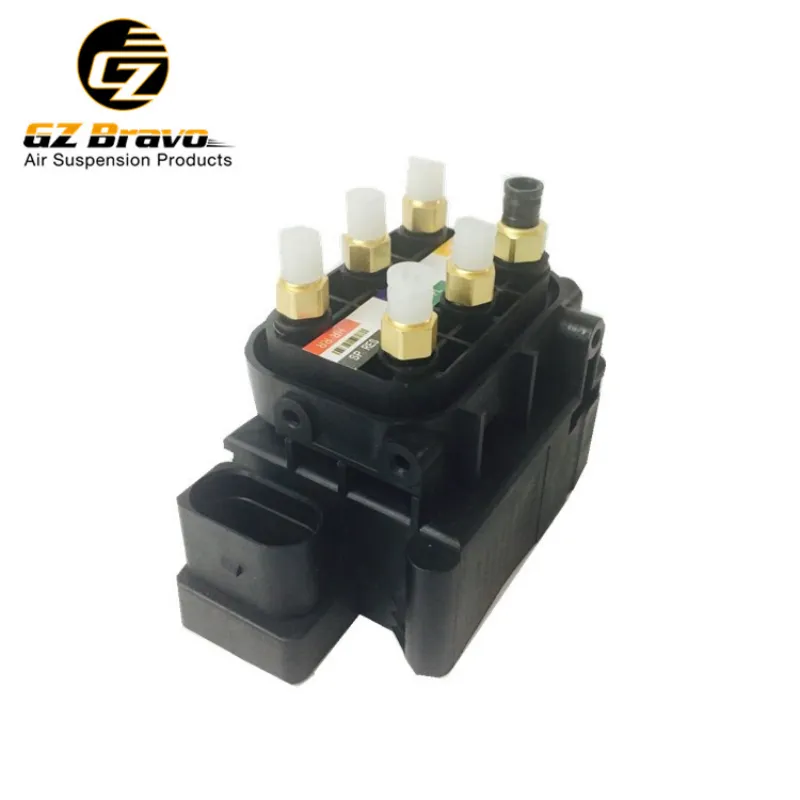
Modern air suspension systems rely on a precise network of components to deliver a smooth, controlled ride — and at the heart of that network sits the solenoid valve block. This compact but critical assembly governs how compressed air is distributed to each air spring, making it the primary decision-maker in any active suspension adjustment cycle. Without it, the system would have no reliable mechanism for directing airflow with the speed and accuracy that today's drivers and engineers demand.
The role of the solenoid valve block in improving suspension adjustment accuracy is both mechanical and electronic. It translates real-time signals from the vehicle's electronic control unit into precisely timed valve openings and closings, regulating the pressure at each corner of the vehicle. When this component is functioning correctly, the suspension responds with speed and precision. When it degrades or fails, the entire system loses its ability to self-correct — resulting in uneven ride height, poor handling, and increased wear on surrounding components.
The Mechanical Role of the Solenoid Valve Block in Air Suspension
How Airflow Is Controlled at the Valve Level
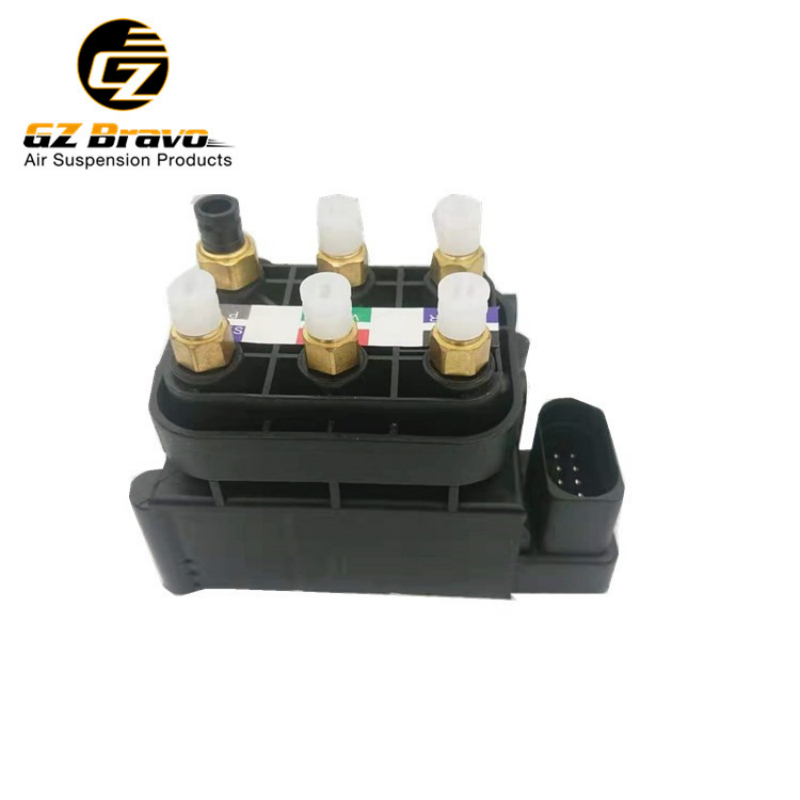
The solenoid valve block is essentially a manifold housing multiple individual solenoid valves, each responsible for a specific air spring or circuit. When an electromagnetic coil within each valve is energized, it shifts a plunger that opens or closes the airway with extreme precision. This on-off control allows the suspension to add or release air from individual springs independently, rather than adjusting the whole system as one unit.
This granular control is what makes modern adaptive suspension possible. On vehicles like the Mercedes-Benz ML W164, GL X164, and the S-Class W221, the system must manage multiple corners simultaneously while responding to changing road conditions. The solenoid valve block acts as the traffic controller for all of this airflow, ensuring each valve responds within milliseconds to electronic commands. Any delay or inconsistency in valve response translates directly into reduced ride quality.
Because each valve operates independently within the block assembly, a failure in one solenoid does not necessarily require replacing individual parts piecemeal. The integrated solenoid valve block design ensures that all valves share the same housing, seal surfaces, and electrical connector, making both replacement and diagnosis more systematic and efficient.
Pressure Regulation and Its Effect on Ride Height Accuracy
One of the most direct ways the solenoid valve block improves suspension adjustment accuracy is through its role in pressure regulation. Air suspension systems operate within specific pressure ranges for each axle and corner. When sensors detect a deviation — such as increased load, corner lean during a turn, or road surface irregularities — the ECU triggers the appropriate solenoid valve to open or close in order to restore the target pressure.
The accuracy of this pressure regulation depends entirely on how cleanly and quickly the solenoid valve block responds to ECU commands. Worn or contaminated valves may stick open or fail to seal completely, allowing pressure to bleed across circuits. This cross-contamination means that adjusting one corner can inadvertently affect another, leading to inaccurate ride height calibration and an unstable suspension response.
A properly functioning solenoid valve block maintains clean separation between circuits, ensuring that pressure commands are isolated and executed accurately. This is particularly important during dynamic driving scenarios where rapid sequential adjustments are required — such as braking into a corner, accelerating on an uneven surface, or navigating a speed bump at varying speeds.
Electronic Integration and Signal Response Accuracy
How the ECU Communicates with the Solenoid Valve Block
The solenoid valve block does not operate in isolation — it is deeply integrated into the vehicle's electronic architecture. The suspension control module continuously monitors input from ride height sensors, accelerometers, steering angle sensors, and vehicle speed data. Based on this combined input, it calculates the optimal suspension configuration and sends targeted voltage signals to the solenoid valve block.
The electrical connector on the solenoid valve block carries individual control lines for each solenoid coil, allowing the ECU to address each valve separately. This means the system can raise the front-left corner independently of the rear-right, for example, achieving the kind of precision that a simple mechanical suspension system could never replicate. The faster and more reliably the solenoid block responds to these signals, the more accurately the suspension conforms to the desired setup.
On OEM-grade replacements designed for vehicles like the W164 and X164 platforms, the electrical resistance values of each solenoid coil are matched to factory specifications. This matters because the ECU uses current draw to confirm valve actuation. If resistance is off due to a substandard replacement, the control module may misinterpret valve position, sending repeated correction signals and destabilizing the adjustment loop.
Response Time and Its Impact on Dynamic Suspension Accuracy
Suspension accuracy is not only about getting to the right pressure — it is also about how quickly the system gets there. A solenoid valve block with fast actuation times ensures that suspension corrections happen before road inputs can translate into cabin movement. This is the core principle behind proactive air suspension systems: react faster than the human body can perceive.
When a solenoid valve block begins to age, internal components such as the coil insulation, the plunger spring, and the valve seat all experience wear. This wear introduces latency into the system — valves that once opened in under 20 milliseconds may now take two or three times as long. At highway speeds, even a small delay in suspension response can mean the difference between a controlled ride and noticeable body movement.
Replacing a degraded solenoid valve block with an OEM-quality unit restores the original response timing specifications. This is why technicians working on Airmatic-equipped vehicles such as the W221 S-Class or the X166 GL-Class consistently find that swapping a worn solenoid block dramatically improves the consistency and feel of suspension adjustments — even when air springs and the compressor appear to be in acceptable condition.
Suspension Adjustment Accuracy Across Different Load and Road Conditions
Load-Dependent Adjustment and Corner Balancing
One of the practical demonstrations of solenoid valve block accuracy is its behavior under varying load conditions. When a vehicle is loaded unevenly — for instance, with passengers on one side or cargo in the rear — the air suspension must compensate by independently inflating certain air springs while deflating others. The solenoid valve block orchestrates this sequence without manual input.
Each valve within the block must open for a precisely calibrated duration to deliver the correct volume of air. If the valves within the solenoid block are worn or have inconsistent flow rates, the system may over-inflate one corner or under-inflate another, leaving the vehicle sitting at an uneven angle. A fresh, OEM-specification solenoid valve block ensures that each valve delivers air at a consistent rate, so the ECU's calculations translate directly into accurate corner height targets.
This load-balancing function is especially critical in platforms like the Mercedes-Benz W166 and X166, which are designed for a combination of on-road comfort and moderate off-road capability. In those scenarios, the suspension may need to adjust across all four corners simultaneously while the vehicle is also in motion — a task that demands exceptional solenoid response reliability.
Terrain and Speed-Based Suspension Modes
Many vehicles equipped with Airmatic or similar air suspension systems include selectable ride height modes — such as lowered highway position, standard ride, or raised off-road clearance. Each of these modes requires the solenoid valve block to execute a controlled fill or vent sequence across all four corners, timed precisely to bring every spring to its target pressure within a defined interval.
If the solenoid block is functioning at reduced efficiency, mode transitions become noticeably sluggish or incomplete. The vehicle may reach an intermediate height rather than the intended target, or one corner may lag behind the others, creating a temporary lean. Drivers often describe this as the suspension feeling 'uncertain' or 'floating' during transitions — a direct result of degraded solenoid valve block performance.
Restoring full accuracy in these mode transitions depends on having a solenoid valve block that can execute clean, coordinated valve sequences. This is why OEM-quality replacements, which replicate the original internal valve geometry and coil specifications, consistently outperform generic aftermarket alternatives in real-world suspension accuracy tests. The solenoid valve block designed specifically for Mercedes-Benz ML W164, GL X164, and related platforms is engineered to meet these exact factory standards.
Signs of Solenoid Valve Block Degradation and Its Effect on Accuracy
Common Symptoms of Reduced Valve Block Performance
Understanding how the solenoid valve block degrades over time helps explain why suspension accuracy declines gradually rather than suddenly. The most common failure mode is internal seal deterioration, which allows small amounts of air to leak across closed valves. At first, this leak may be too small to trigger a fault code, but it causes the ECU to work harder to maintain target pressures — running the compressor more frequently and making more frequent micro-adjustments.
Over time, this leads to compressor overload and premature wear on adjacent components. Drivers may notice that the vehicle takes longer to level itself after loading, that it drops during extended parking periods, or that the suspension feels less responsive during spirited driving. All of these symptoms point to a solenoid valve block that is no longer executing adjustments with its original accuracy.
In some cases, a fault code related to individual corner height sensors is logged, even though the sensor itself is functioning correctly. This happens because the ECU cannot distinguish between a sensor reporting an incorrect height and a valve block that is failing to deliver the commanded air volume. Diagnosis should always include pressure testing the solenoid block circuits before replacing sensors or springs.
Diagnostic Best Practices Before Replacement
When suspension accuracy issues arise, a thorough diagnostic process should evaluate the solenoid valve block as a primary suspect, especially on high-mileage vehicles. Technicians should check for air leaks at the block's port connections, measure solenoid coil resistance against factory specifications, and observe whether the ECU is logging any valve circuit faults.
It is also worth performing a dynamic test where each valve is individually actuated through a scan tool while monitoring the corresponding corner's pressure response. A healthy solenoid valve block will produce an immediate, measurable pressure change when each valve is triggered. A sluggish or absent response indicates a valve that is sticking, leaking, or electrically degraded.
Once the solenoid valve block is confirmed as the fault source, replacement with an OEM-grade assembly is the most reliable path to restoring full suspension adjustment accuracy. Generic replacements may fit physically but often fail to replicate the precise valve timing and pressure characteristics required by the original system design — especially on premium platforms like the W221 S-Class and the W164 ML-Class.
FAQ
What is the main function of a solenoid valve block in an air suspension system?
The solenoid valve block controls the distribution of compressed air to individual air springs by opening and closing internal solenoid valves in response to electronic commands from the suspension control unit. It enables independent pressure adjustment at each corner of the vehicle, which is the foundation of accurate ride height and load-level control.
How does a worn solenoid valve block affect ride height accuracy?
A worn solenoid valve block introduces pressure leaks and delayed valve response, which cause the suspension to over-correct, under-correct, or unevenly distribute air across corners. This results in inconsistent ride height, extended leveling times, and a suspension that feels unpredictable or soft during load changes and mode transitions.
Can a faulty solenoid valve block cause the compressor to overwork?
Yes. When the solenoid valve block leaks internally, the system continuously loses pressure even after the compressor has brought it to target levels. The ECU detects the pressure drop and commands the compressor to run again, creating a cycle of overactivity that accelerates compressor wear and can lead to premature failure of both the compressor and surrounding components.
Is an OEM-quality solenoid valve block necessary for maintaining accuracy on Mercedes-Benz Airmatic systems?
For Mercedes-Benz Airmatic systems — including those on the W164, X164, W166, X166, and W221 platforms — OEM-quality specifications are critical because the suspension control module is calibrated to expect specific valve response times, flow rates, and coil resistance values. A replacement solenoid valve block that deviates from these specifications can disrupt the ECU's calibration loop and result in continued accuracy problems even after installation.
Table of Contents
- The Mechanical Role of the Solenoid Valve Block in Air Suspension
- Electronic Integration and Signal Response Accuracy
- Suspension Adjustment Accuracy Across Different Load and Road Conditions
- Signs of Solenoid Valve Block Degradation and Its Effect on Accuracy
-
FAQ
- What is the main function of a solenoid valve block in an air suspension system?
- How does a worn solenoid valve block affect ride height accuracy?
- Can a faulty solenoid valve block cause the compressor to overwork?
- Is an OEM-quality solenoid valve block necessary for maintaining accuracy on Mercedes-Benz Airmatic systems?