
 EN
EN



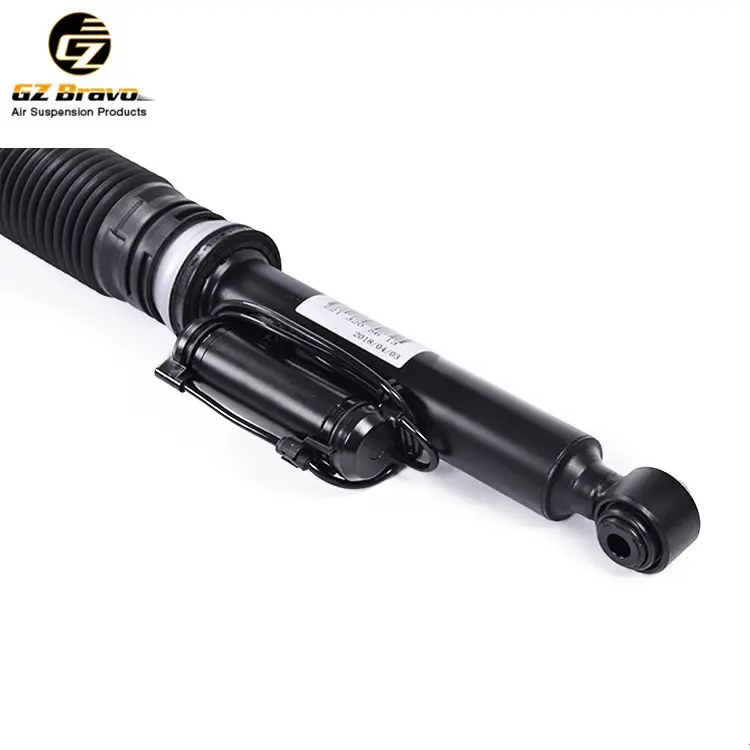
When a vehicle travels at high speed, the margin for error shrinks dramatically. Every bump in the road, every shift in load distribution, and every gust of crosswind becomes a real threat to driver control. This is precisely where air suspension proves its engineering value — not as a luxury accessory, but as a functional system that actively manages vehicle dynamics under demanding conditions. Understanding how air suspension enhances stability during high-speed driving means examining the physical and mechanical principles that separate it from conventional coil or leaf spring systems.
The core mechanism of air suspension relies on pressurized air chambers, electronically controlled valves, and height sensors working in concert to continuously adapt the vehicle's ride height and damping response. Unlike passive steel spring systems that apply a fixed resistance regardless of road input, air suspension dynamically adjusts to changing conditions in real time. This adaptive capability is what makes air suspension an increasingly standard feature in high-performance sedans, premium SUVs, and heavy-duty commercial vehicles that operate at elevated speeds on varied road surfaces.
The Physical Mechanics Behind High-Speed Stability
How Air Springs Respond to Dynamic Load Shifts
At high speeds, a vehicle's weight distribution is never static. Acceleration pushes mass rearward, braking throws it forward, and cornering forces it laterally. Each of these transitions creates a momentary imbalance that, without correction, can lead to instability or loss of traction. Air suspension addresses this by modulating the air pressure in each spring independently, redistributing support to counteract weight transfer before the driver even perceives a handling problem.
Traditional coil springs store and release mechanical energy at a fixed rate determined by their material stiffness. This means they handle a light load and a fully loaded vehicle the same way — inefficiently in one case or the other. Air suspension eliminates this limitation because the stiffness of an air spring is directly proportional to the pressure inside it, and that pressure is adjustable. The result is a system that can be simultaneously soft enough for comfort and firm enough for control, depending on what the driving conditions demand at any given moment.
This continuous pressure management also reduces body roll during high-speed cornering. When the vehicle begins to lean, the air suspension system increases pressure on the outer springs to resist the lean while slightly relaxing pressure on the inner springs. This anti-roll behavior is far more responsive than traditional sway bars alone, and it contributes directly to the confident, planted feel that drivers associate with well-tuned air suspension setups.
Ride Height Control and Aerodynamic Stability
One of the most practically important functions of air suspension at high speeds is automatic ride height management. As vehicle speed increases, aerodynamic lift becomes a measurable force acting against tire contact with the road. Modern air suspension systems can lower the vehicle's ride height at highway speeds, reducing the gap between the undercarriage and the road surface, which in turn decreases aerodynamic drag and improves ground-level downforce.
This lower stance at speed is not just a performance advantage — it is a safety mechanism. A lower center of gravity means the vehicle is less susceptible to rollover risk, particularly relevant for tall vehicles like SUVs and vans that carry their mass high. The ability of air suspension to actively manage this variable across different speeds gives it a clear functional advantage in preserving high-speed stability that static suspension systems simply cannot replicate.
When the vehicle slows down or encounters a rough road requiring more ground clearance, the air suspension system raises the ride height back to an appropriate level. This bidirectional adaptability means drivers never have to choose between highway performance and off-road capability — the system makes that adjustment automatically, based on sensor inputs and preset control logic.
Damping Precision and Road Surface Adaptation
Electronic Control Units and Sensor Integration
Modern air suspension systems are not merely pneumatic — they are deeply integrated with a vehicle's electronic architecture. Accelerometers, wheel speed sensors, steering angle sensors, and body height sensors feed continuous data to the suspension control module. This module interprets the incoming data stream and issues pressure adjustments to individual air springs within milliseconds, long before a driver's reflexes could respond to the same road input.
This sensor-driven approach to damping control is what elevates air suspension beyond a passive comfort feature into an active safety system. On a straight high-speed run, if a rear wheel encounters a pothole while the front wheels encounter smooth pavement, the air suspension system adjusts the rear independently, preventing the chassis from pitching. This isolation of disturbances — dealing with each axle and sometimes each wheel individually — keeps the vehicle's body motion controlled and predictable throughout the event.
The control unit also interfaces with other chassis management systems such as electronic stability control and adaptive cruise control. When these systems detect a potential loss of stability, they can request immediate adjustments from the air suspension to optimize tire contact patch distribution before wheel slip occurs. This cooperative architecture is particularly effective at high speeds where the time available for driver intervention is extremely limited.
Frequency-Selective Damping Behavior
Road inputs span a wide frequency range — from slow undulations in highway pavement to rapid sharp impacts from expansion joints or debris. Conventional dampers handle all these frequencies with the same resistance curve, which means they are often too stiff for comfort on gentle waves or too soft to control rapid body motion. Air suspension systems with electronically adjustable dampers can vary their resistance across different frequency bands, applying soft damping to low-frequency inputs and firmer control to high-frequency events.
At highway speeds, high-frequency inputs are more prevalent and arrive more rapidly. The ability of air suspension to stiffen its response to these inputs means the vehicle body remains more isolated from road noise and vibration while still maintaining structural firmness where it matters for control. Drivers and passengers experience this as a ride that feels simultaneously smooth and connected — composed at highway speeds in a way that steel-spring cars often struggle to achieve without compromising either comfort or handling.
This frequency-selective behavior also reduces fatigue on suspension components. By not over-compressing during routine road inputs, the air spring and associated components experience less mechanical stress over time, contributing to longer service intervals and more predictable performance throughout the component's operational life.
Load Management and Consistent Handling Across Payload Conditions
Maintaining Geometry Under Variable Loads
One of the most underappreciated advantages of air suspension at high speeds is its ability to maintain consistent suspension geometry regardless of how much weight the vehicle is carrying. A steel-spring vehicle that is heavily loaded in the rear will experience a sagging rear end that alters the camber angle of the rear wheels, changes the vehicle's nose-up attitude, and effectively reduces the precision of the steering response. None of these changes are desirable at 100 kilometers per hour or above.
Air suspension corrects for load automatically. When the rear of the vehicle is loaded — whether by cargo or passengers — the system increases rear air pressure to restore the target ride height. This means the suspension geometry remains within its designed operating range, and all the handling characteristics the vehicle was engineered to deliver remain intact. From a high-speed stability perspective, this translates to predictable, consistent behavior whether the car carries two people or five, and whether the trunk is empty or full.
For commercial vehicles, this function is even more critical. A truck or van operating at highway speeds with varying cargo loads faces substantial dynamic challenges. Air suspension ensures that the vehicle's stability margins do not erode as payload increases, protecting both the cargo and other road users from the consequences of degraded handling at speed.
Anti-Dive and Anti-Squat Performance
Braking at high speed generates intense forward weight transfer — known as nose dive — which can cause the front suspension to compress dramatically while the rear rises. This geometry change reduces rear tire contact and alters steering feel in ways that can be alarming and unsafe. Air suspension systems with active anti-dive calibration detect the deceleration event and rapidly increase front air pressure to resist the dive, keeping the vehicle's stance more level throughout the braking event.
Similarly, during high-speed acceleration, the rearward squat tendency is counteracted by the air suspension system increasing pressure in the rear springs. This keeps the front wheels loaded and steerable even during aggressive throttle application, which is essential for maintaining directional control at elevated speeds. These anti-dive and anti-squat characteristics work together to create a more stable, planted driving experience that passive spring systems cannot replicate with the same speed or precision.
The practical outcome for drivers is a vehicle that responds more linearly and predictably to driver inputs at high speed. When braking, cornering, and acceleration all produce less dramatic geometry change, the driver receives cleaner feedback through the steering wheel and seat, making it easier to maintain control and make precise adjustments throughout a high-speed maneuver.
Long-Term Reliability and Performance Retention in High-Speed Applications
Component Durability Under Sustained High-Speed Loads
A suspension system's ability to enhance high-speed stability depends not just on its design but on its ability to maintain performance over time. Air suspension components are specifically engineered to withstand the sustained loads and thermal cycles associated with extended high-speed driving. The air springs themselves are typically constructed from multi-layer reinforced rubber that resists fatigue from repeated compression cycles, while the dampers are built with heat-dissipating designs to prevent fade during prolonged high-speed use.
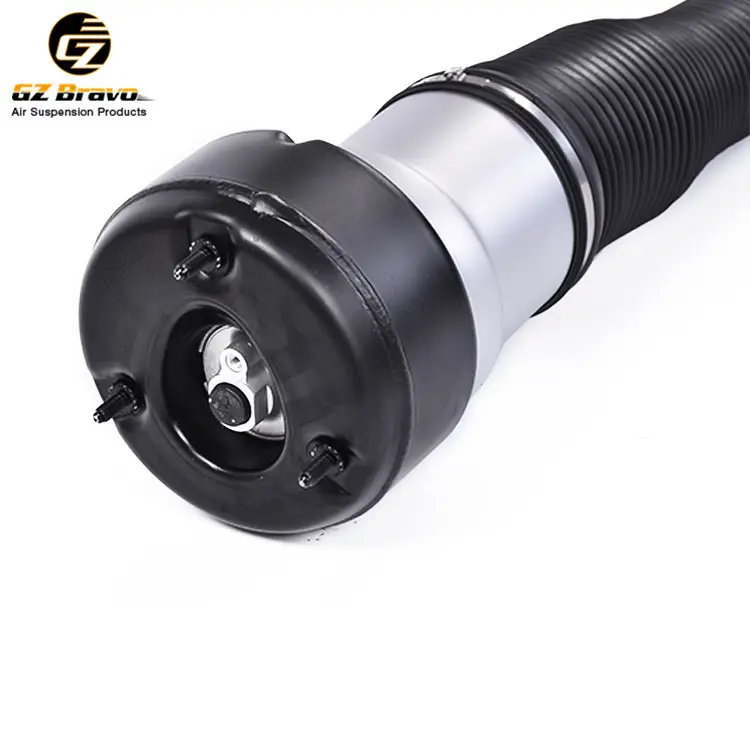
The air suspension components used in premium applications, such as the rear air strut systems found in vehicles like the Mercedes-Benz S-Class W221, are designed to deliver consistent performance across a wide operational envelope. These components undergo extensive validation testing that includes high-speed stability runs, prolonged motorway cruising cycles, and repeated dynamic load transitions to verify that their stability-enhancing properties remain intact across the full expected service life.
Maintaining air suspension components in good condition is therefore not purely a comfort consideration — it has a direct bearing on the vehicle's high-speed safety margin. A worn air spring that cannot maintain consistent pressure, or a degraded damper that can no longer control body motion, will progressively erode the stability advantages that the system was designed to provide. Regular inspection and timely replacement of wear-sensitive components is essential for drivers who regularly operate at highway speeds.
System Diagnostics and Predictive Maintenance
Modern air suspension platforms are equipped with self-diagnostic capabilities that monitor system pressure, ride height sensor outputs, and compressor performance. When deviations from baseline parameters are detected — such as a spring that is losing pressure more rapidly than expected, or a damper exhibiting abnormal response characteristics — the system logs a fault and alerts the driver through the vehicle's instrument cluster. This early warning mechanism prevents progressive degradation from going unnoticed until it becomes a safety concern at speed.
For fleet operators and vehicle managers, these diagnostic outputs also support predictive maintenance strategies. By analyzing trend data from the suspension control module over time, maintenance teams can identify components approaching end-of-life before they fail in service, scheduling replacements during planned downtime rather than responding to unexpected failures. This proactive approach is especially valuable for vehicles that spend significant operational time at highway speeds, where the consequences of a sudden air suspension failure are most severe.
Investing in quality replacement components when servicing air suspension is equally important. Substandard replacement air springs or dampers that do not meet the original system's pressure specifications or damping curves will not reproduce the vehicle's intended high-speed stability characteristics, regardless of how good the original system design was. Specification-matched components are the only reliable way to restore the system's full performance envelope after service.
FAQ
How does air suspension improve stability compared to coil spring suspension at high speeds?
Air suspension improves high-speed stability by dynamically adjusting spring stiffness and ride height in real time, whereas coil spring suspension applies a fixed resistance regardless of load or speed conditions. This means air suspension can actively counteract body roll, nose dive, and rear squat as they occur, rather than allowing the vehicle geometry to shift unchecked. The result is more consistent tire contact, more predictable steering response, and a significantly higher margin of control during demanding high-speed maneuvers.
Can air suspension lower the vehicle automatically at highway speeds?
Yes, most modern air suspension systems include a speed-dependent ride height function that automatically lowers the vehicle at highway speeds. This reduction in ride height decreases aerodynamic drag and lowers the center of gravity, both of which contribute directly to improved high-speed stability and fuel efficiency. When the vehicle slows below the threshold speed or encounters conditions requiring more ground clearance, the system restores the standard ride height automatically without driver input.
Does air suspension help with stability when the vehicle is carrying heavy loads at speed?
Air suspension is particularly effective at maintaining stability under varying load conditions because it automatically adjusts air pressure to keep the ride height and suspension geometry within designed parameters regardless of payload. This means a heavily loaded vehicle retains the same handling characteristics as an unladen one, preventing the rear sag, altered camber, and reduced steering precision that would otherwise develop with a static spring system under load at highway speeds.
How often should air suspension components be inspected for vehicles used frequently at highway speeds?
For vehicles regularly operated at highway speeds, air suspension components should be inspected at least annually or every 30,000 to 50,000 kilometers, whichever comes first. Inspection should cover air spring integrity, damper response, ride height sensor accuracy, and compressor performance. Vehicles that show any signs of uneven ride height, audible air leaks, or increased body motion during high-speed driving should be inspected immediately, as these symptoms indicate that the system's stability-enhancing function may already be compromised.
Table of Contents
- The Physical Mechanics Behind High-Speed Stability
- Damping Precision and Road Surface Adaptation
- Load Management and Consistent Handling Across Payload Conditions
- Long-Term Reliability and Performance Retention in High-Speed Applications
-
FAQ
- How does air suspension improve stability compared to coil spring suspension at high speeds?
- Can air suspension lower the vehicle automatically at highway speeds?
- Does air suspension help with stability when the vehicle is carrying heavy loads at speed?
- How often should air suspension components be inspected for vehicles used frequently at highway speeds?